




















What Is Third-Party Liability Insurance in Türkiye?
Public liability cover responding, within the policy limits, to compensation claims brought against the insured where a third party is killed, injured or suffers property damage because of the business operations described in the policy.
Third-party liability insurance — public liability, in the wording used across most markets — responds to compensation claims brought against a business when an incident during its operations kills or injures a third party or damages their property. In Türkiye the general conditions have been in force since 6 April 1959 and their language is far removed from modern Turkish. Most disputes about scope arise not because the wording was never read, but because its archaic terms were misunderstood.
Whom Does the Policy Protect, and Against What?
Article 1 ties cover to three elements: an incident occurring while the insurance is in force; the death or injury of third parties, or damage to their property, as a result; and a causal link to the capacity, activity and legal relationship stated in the policy. Cover operates within Turkish law on civil liability, up to the sums written in the policy.
The same article contains a sentence most readers miss: the policy protects the insured against unfounded and excessive claims as well as well-founded ones. Its value lies not only in indemnity paid, but in the defence of claims that should not be paid at all.
Where the insured is a legal person, cover extends to the liability of its organs in discharging their duties. Article 1473(2) of the Turkish Commercial Code widens the frame: insurance taken out for business liability also covers the representative and those managing, supervising or employed in the business, unless the contract provides otherwise.
Why Businesses Need It: Where Does the Liability Come From?
A business's liability towards third parties comes from several provisions that reinforce one another. Under Article 66 of the Turkish Code of Obligations, an employer must make good the loss an employee causes to others at work, unless it proves due care in selection, instruction, supervision and control.
Article 69 holds the owner of a building or structure liable for loss arising from defects in construction or shortcomings in maintenance; usufructuaries and holders of a right of habitation are jointly and severally liable alongside the owner for maintenance failures. Proof of care is no escape route here.
The strictest rule is Article 71. Where loss arises from an enterprise presenting a significant hazard, the owner and any operator are jointly and severally liable. An enterprise is significantly hazardous where its nature, or the materials, equipment or forces used, make it apt to cause frequent or severe loss even with all the care expected of an expert; legal permission changes nothing. What the three provisions share is this — showing that you were not at fault does not always save the business.
What the General Conditions Leave Out
Paragraph (A) of Article 3 lists the exclusions. The eighth limb surprises businesses most: third-party goods held on bailment, hire, for carriage or repair; loss from defects in goods manufactured, delivered or processed; and damage to the building and land where the work is done all fall outside this policy.
Claims connected with motor vehicles are excluded as well. Because of that limb, this cover is often confused with the voluntary excess motor liability extension known in Türkiye as İhtiyari Mali Mesuliyet, which sits above the limits of compulsory motor third-party liability insurance.
- Claims for loss caused intentionally or knowingly
- Claims resting on a contract or special arrangement that exceed the measure of liability at law
- Claims by persons bound to the insured by a contract of service or agency, and by family members
- Claims against drivers, possessors or owners of motor vehicles, trailers, motorcycles and aircraft
- Claims arising from participation in races and competitions, training included
- Claims arising from war, revolution, rebellion, insurrection, strike, their suppression and requisition
- Loss caused by rot or gradual absorption of damp
- Loss to third-party goods held on bailment, hire, for carriage, repair or processing; claims from defective manufacture, delivery or workmanship; damage to the building and land where the work is done
- Loss from acts of terrorism under Law No. 3713, sabotage flowing from them and official intervention
Extensions Available by Additional Agreement
Paragraph (B) of the same article allows three headings outside the standard cover to be brought in by additional agreement. These are not afterthoughts; for most businesses they sit at the centre of the real risk map.
The extension for hotel and garage keepers refers to the Code of Obligations as it stood when the wording was drafted; today's equivalents are Articles 576 to 580 of Code No. 6098. Hotels, motels, guesthouses and holiday villages answer for loss, damage or theft of goods brought by guests, and unless fault is attributed that liability cannot exceed three times the daily accommodation charge per guest — for garages and car parks, ten times the daily storage charge per item.
Lifts appear here as an optional extension. A separate liability insurance product also exists for lifts in Türkiye; the two should not be confused.
| Extension | What it covers | Typical buyer |
|---|---|---|
| Lifts and goods hoists | Liability for loss caused to third parties by lifts in the premises named in the policy or used in the work | Building managers, premises owners, contractors |
| Hotel, garage and car-park liability | The operator's liability for guests' property and vehicles left in its keeping | Hotels, motels, guesthouses, holiday villages, garages, car parks |
| Liability from natural perils and fire | Liability arising from earthquake, flood, inundation, avalanche, landslide, volcanic eruption, explosion, fire, smoke, fog, steam and water | Businesses with warehouses, workshops or production plants |
Employees' Liability and Employees' Claims Are Not the Same Thing
These two ideas are constantly conflated, and the confusion sets the wrong expectation. Under Article 1473, insurance taken out for business liability also covers the liability of employees towards third parties: if a warehouse employee injures a visitor, the claim is within the policy.
By contrast, limb three of Article 3(A) excludes claims by persons bound to the insured by a contract of service or agency and by family members. The wording defines family: spouse, ascendants and descendants, adopted children included; where they live together, siblings, in-laws and other relatives supported by the insured; and the spouse's ascendants, descendants and siblings.
The conclusion is clear: loss your employee causes to a third party is met here; a claim your employee brings for their own loss is not. Occupational accidents and diseases belong to a separate contract, employer's liability insurance.
Time Limits at Claim Stage, and the Common Mistake
Article 7 requires written notice within five days of learning of an event capable of giving rise to liability. Article 1475 of the Turkish Commercial Code allows ten days, and Article 1486(3) provides that Articles 1474 to 1476 cannot be varied to the insured's detriment; the safest course is to observe the shorter period.
The costliest mistake is not late notice but a well-meant payment. Under Article 8, unless the insurer expressly permits it, the insured may neither admit a claim nor pay anything to those who suffered loss. Article 10 completes the picture: if the insured fails to observe its duties, the insurer is released from its obligation to indemnify, unless the insured proves the failure was not its own fault.
Once proceedings begin, conduct passes to the insurer: under Article 9 it may settle directly with the third party and defends in the insured's name, bearing the costs — though those costs plus the indemnity cannot exceed the maximum sum stated in the policy.
On limitation, two texts must be read side by side. Article 15 of the general conditions time-bars all claims under the contract in two years; Article 1482 of the Turkish Commercial Code sets ten years from the event for claims addressed to the insurer in liability insurance, and Article 1486(2) renders contrary terms void. Article 1478 gives the injured party a direct right of action up to the sum insured.
What to Look At When Structuring the Policy
Nothing in the name of this policy says compulsory, yet for some activities the legislation makes it so. Article 5 of the Communiqué on Insurance Obligations in the Petroleum Market requires licence holders to insure the injury and damage their activities may cause to third parties; Article 7 ties minimum limits to the compulsory hazardous-substances tariff and, for dealerships, to the highest per-accident limit in the motor tariff, while Article 10 bars any deductible.
The decisive line when the policy is written is the description of capacity and activity recorded in it; cover does not travel beyond that description. When operations widen, a branch opens or subcontractors start work, the description has to be updated.
RYL Sigorta Aracılık Hizmetleri is an insurance agency: we do not issue the policy, and any indemnity is paid by the insurance company that is party to the contract. Our work is to map your activity description and extension needs and prepare quotations from the insurers we act for. Tell us your line of business and places of operation.
Frequently Asked Questions
Who counts as a third party, and are my employees third parties?
A third party is someone outside the insurance relationship who suffers loss because of the business's operations. Claims brought by persons bound to the insured by a contract of service or agency, and by the insured's family members, are excluded under Article 3 of the general conditions; claims arising from occupational accidents and diseases belong to employer's liability insurance.
Does the policy respond to damage to customer goods left in my care?
No. Claims for loss to third-party goods held by the insured or its staff on bailment, hire, for carriage, repair or processing are expressly excluded by the general conditions. That exposure has to be addressed through a separate arrangement.
Is a claim arising from a defect in the product I make covered?
Not under the standard cover. The general conditions exclude claims for loss arising from defects and faults in things manufactured, delivered or processed by the insured, its staff or those acting on its behalf.
Can the injured party approach the insurance company directly?
Yes. Article 1478 of the Turkish Commercial Code gives the injured party the right to claim compensation for the loss, up to the sum insured, directly from the insurer, provided the limitation period applicable to the contract has not expired.
Is liability arising from earthquake or fire included?
Not in the standard policy; it appears on the list of extensions available by additional agreement. Liability arising from earthquake, flood, inundation, avalanche, landslide, volcanic eruption, explosion, fire, smoke, fog, steam and water can only be covered by such an agreement.
Sources
- General Conditions of Third-Party Financial Liability Insurance (full text)
- Turkish Commercial Code No. 6102, Book Six — Insurance Law
- Turkish Code of Obligations No. 6098 (full text)
- SEDDK — Communiqué on Insurance Obligations in the Petroleum Market
- SEDDK — Insurance general conditions
This article is for information only; the scope of cover is set by the policy’s specific and general terms.
Related Articles
 Liability
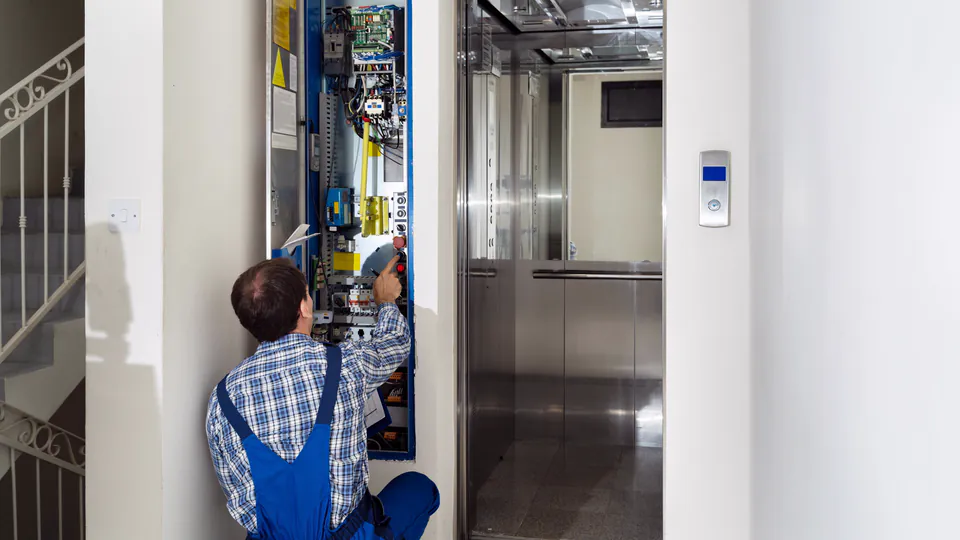
Lift Maintenance Professional Indemnity Insurance in Türkiye
Professional indemnity cover responding, within the policy limits, to claims arising from professional error or omission in the maintenance, repair and servicing of a lift.
Read the Article Liability
Professional Indemnity Insurance for Lawyers in Türkiye
Cover responding, within the policy limits, to claims arising from a lawyer's failure to perform the retainer properly, breach of the duty of care or other negligent conduct.
Read the Article Liability
Drone Insurance in Türkiye: What Is Actually Required?
Third-party liability cover responding to compensation claims made against the operator for damage caused by an unmanned aircraft, with minimum sums set by regulation.
Read the Article